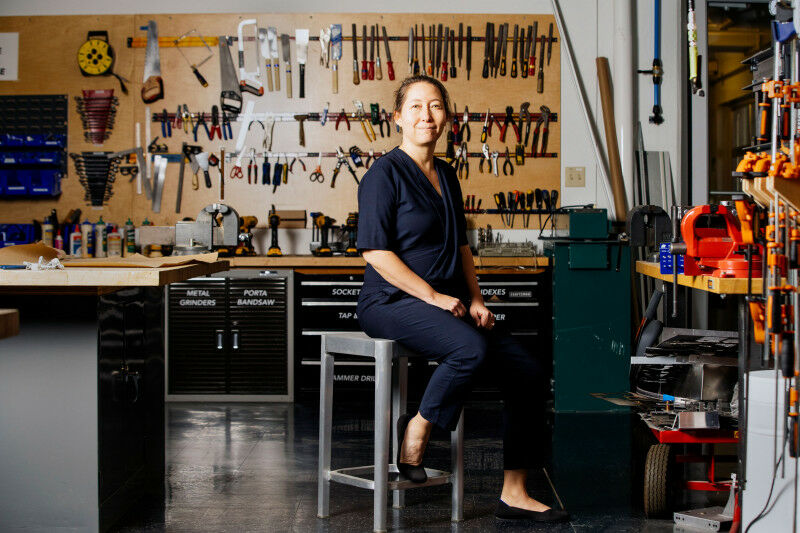
MIT architecture professor Miho Mazereeuw’s work on disaster resilience focuses on plans, people, and policies, as well as technology and design, to prepare for the future. Credits : Photo: M. Scott Brauer
MIT architecture professor Miho Mazereeuw's work on disaster resilience focuses on plans, people, and policies, as well as technology and design, to prepare for the future. Credits : Photo: M. Scott Brauer - Miho Mazereeuw, an architect of built and natural environments, looks for new ways to get people ready for natural disasters. The Kobe earthquake of 1995 devastated one of Japan's major cities, leaving over 6,000 people dead while destroying or making unusable hundreds of thousands of structures. It toppled elevated freeway segments, wrecked mass transit systems, and damaged the city's port capacity. "It was a shock to a highly engineered, urban city to have undergone that much destruction," says Miho Mazereeuw, an associate professor at MIT who specializes in disaster resilience. Even in a country like Japan, with advanced engineering, and policies in place to update safety codes, natural forces can overwhelm the built environment. "There's nothing that's ever guaranteed safe," says Mazereeuw, an associate professor of architecture and urbanism in MIT's Department of Architecture and director of the Urban Risk Lab.
TO READ THIS ARTICLE, CREATE YOUR ACCOUNT
And extend your reading, free of charge and with no commitment.