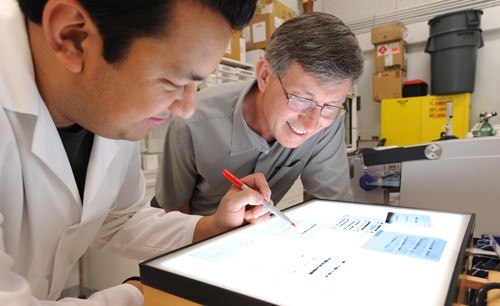
Kinesiology Greg Cartee and a colleague theorize that exercise benefits lean and obese people differently. Image credit: School of Kinesiology
ANN ARBOR-Researchers at the University of Michigan School of Kinesiology have received a $1 million grant to study how exercise and other therapies might work differently in lean and obese individuals. Greg Cartee, U-M professor of movement science, and his colleagues at the Muscle Biology Laboratory hope to clarify the link between insulin, exercise and sugar uptake by studying how lean and obese rats respond to exercise. The grant comes from the National Institute of Diabetes and Digestive Kidney and Health, which has funded Cartee's research since 2006. Exercise and insulin help our bodies sop up glucose, the main type of sugar in the blood, so muscles can use it for energy. Insulin resistance, the inability to efficiently remove sugar from the blood, can contribute to diabetes, obesity and other health problems. Efficiently clearing blood sugar after meals, a process called glucose, or sugar uptake, is critical to improving the health of obese people. Previous research from Cartee's lab found that during a sedentary state, fibers from obese rates couldn't take up as much sugar as fibers from lean rats.
TO READ THIS ARTICLE, CREATE YOUR ACCOUNT
And extend your reading, free of charge and with no commitment.