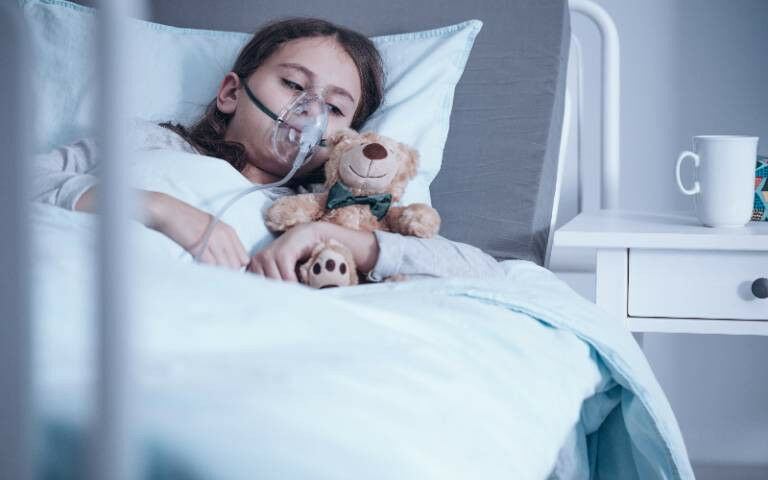
child wearing an oxygen mask in a hospital bed
child wearing an oxygen mask in a hospital bed Reducing oxygen levels in critically ill children on mechanical ventilators in intensive care could save tens of young lives each year, finds a new study led by researchers at UCL and Great Ormond Street Hospital. The study, funded by the National Institute for Health and Care Research and published in The Lancet , also found that lower levels of oxygen would reduce the number of days children spent on machines supporting organs, saving the NHS £20million every year. Lead author, Professor Mark Peters (UCL Great Ormond Street Institute of Child Health and Consultant Paediatric Intensivist at GOSH), said: "Giving the minimum safe dose of anything in intensive care appears to generate the best outcomes, so we wanted to test this approach with oxygen. We found a small benefit of lower oxygen targets that is unlikely to have been due to chance. But because so many children are treated with oxygen, this has the potential to improve outcomes and reduce healthcare costs in the UK and around the world. "This could have particular implications in countries where oxygen is a scare resource, or in situations as we have seen in recent years, where health needs change, and oxygen demand quickly peaks." In the UK, around 20,000 children are admitted to intensive care each year and roughly 75% will receive additional oxygen through a ventilator. Oxygen is one of the most common treatments used in emergency situations.
TO READ THIS ARTICLE, CREATE YOUR ACCOUNT
And extend your reading, free of charge and with no commitment.