Herron Island Research Station
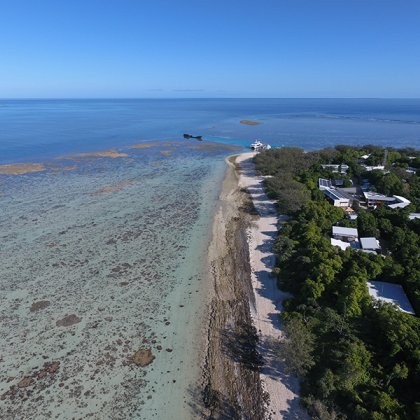
The largest marine research station on the Great Barrier Reef is set to shift to a cleaner energy source, with solar generation and storage to meet most of its electricity needs. The University of Queensland's Heron Island Research Station - internationally renowned for coral reef and ecological research - will install an integrated microgrid system including roof top solar panels and battery storage facilities. Project manager Danielle Shaffer said wind generation was not an option due to the 100,000 migrant and resident birds who live on or visit the island over the course of the year. "Instead, high-efficiency solar panels will be installed on 22 rooftops, and at peak power they will produce more than four times the energy needed by the research station," Ms Shaffer said. "The surplus energy will charge the battery for use once the sun goes down." The system is expected to be operational mid-next year, delivering more than 80 per cent of the facility's annual energy needs and ending the station's reliance on diesel-generated power from the island's resort. Heron Island is a national park, 80 kilometre north-east of Gladstone, and is significant nesting location for two turtle species. "On Heron we have research and education facilities including scientific equipment rarely found outside large mainland laboratories," Ms Shaffer said.
TO READ THIS ARTICLE, CREATE YOUR ACCOUNT
And extend your reading, free of charge and with no commitment.