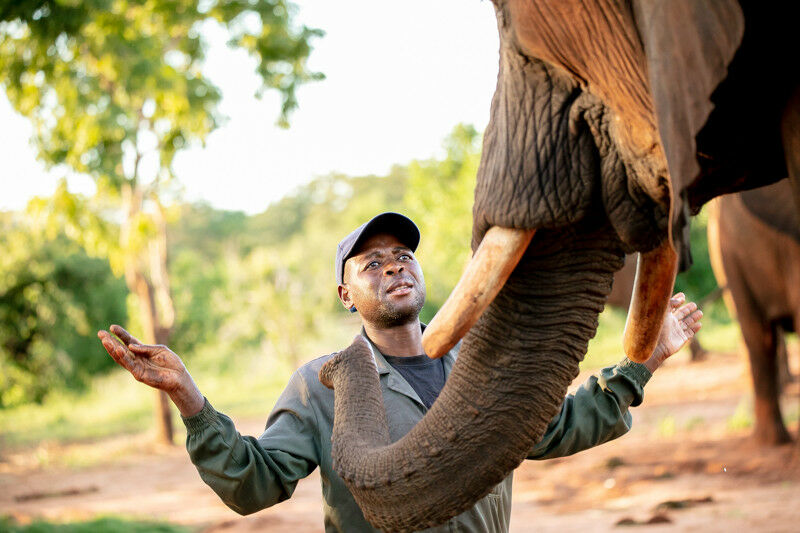
An elephant carer, Wilfred, teaches ’ear flap’ to Tatu. This is a natural movement elephants use for cooling and to ward off flies, and it also expresses alertness. Encouraging elephants to do this gesture interactively promotes positive connections between humans and elephants. Photo: Lessane Fowler/eleCREW
An elephant carer, Wilfred, teaches 'ear flap' to Tatu. This is a natural movement elephants use for cooling and to ward off flies, and it also expresses alertness. Encouraging elephants to do this gesture interactively promotes positive connections between humans and elephants. Photo: Lessane Fowler/eleCREW New rigorous welfare standards developed by Professor Christine Nicol, Professor of Animal Welfare at the Royal Veterinary College, in collaboration with the animal protection charity, We Are All Mammals (WAAM), have been introduced in facilities across Southern Africa. The Standards for the Management and Welfare of Elephants in Human Care are the first to provide guidance on how to manage elephants under human care and will help ensure that elephants receive the highest possible standards of care. The new guidelines go beyond simply keeping elephants in good physical health by recognising their autonomy and intelligence. In addition, these benchmarks will help facilities demonstrate to visitors and donors that the elephants they are supporting are managed to the highest possible standards.
TO READ THIS ARTICLE, CREATE YOUR ACCOUNT
And extend your reading, free of charge and with no commitment.