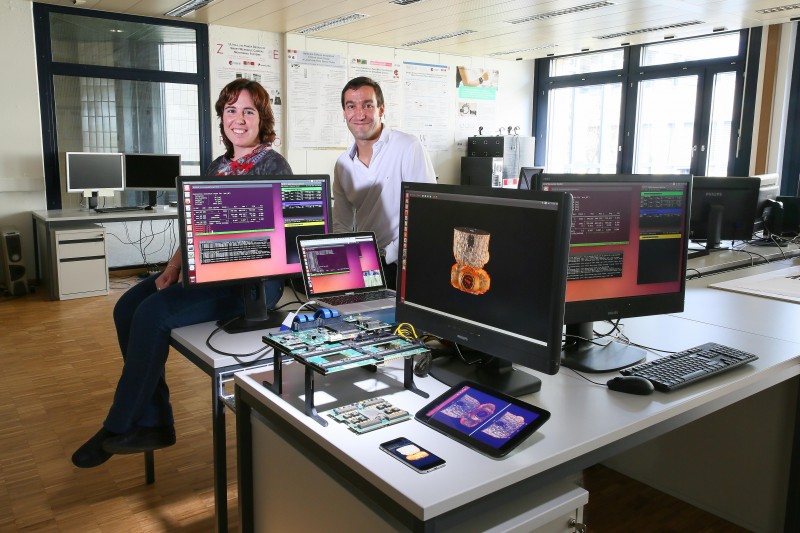
Given the growing number of users and the widening range of devices, streaming is no longer viable in its current form owing to the substantial amount of power and storage capacity it requires. But researchers at EPFL's Embedded Systems Laboratory (ESL) have found a way to reduce those requirements without impacting the quality of the video itself. A video posted on the internet might be watched by thousands of different people, each with his own device, internet connection and viewing environment. But that doesn't mean the streaming service will be personalized for each user. "Platforms like YouTube or Netflix use two systems, both of which are inefficient," says Marina Zapater Sancho, post-doctoral researcher at ESL. She is one of the authors of the study being carried out under the MANGO project, which has received funding from the EU Horizon 2020 program and will be presented at the Embedded Systems Week in Seoul on 15 October 2017. "They store either one copy of a video in the highest-quality format possible, or dozens of copies in different formats." The former can result in slow and choppy streaming, while the latter takes up huge amounts of server storage and consequently eats up lots of power.
TO READ THIS ARTICLE, CREATE YOUR ACCOUNT
And extend your reading, free of charge and with no commitment.
Your Benefits
- Access to all content
- Receive newsmails for news and jobs
- Post ads