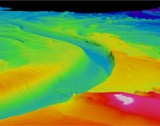
A team of scientists led by the University of Leeds has used a robotic ‘yellow submarine’ to observe detailed flows within an ‘undersea river’ for the very first time.
The researchers estimate that the river - known as a submarine channel - would be the sixth largest river in the world if it were on land based on the amount of water flowing through it. Submarine channels are similar to land rivers, but they are formed by density currents - underwater flow mixtures of sand, mud and water that are denser than sea water and so sink and flow along the bottom. These channels are the main transport pathway for sediments to the deep sea where they form sedimentary deposits. These deposits ultimately hold not only untapped reserves of gas and oil, they also house important secrets - from clues on past climate change to the ways in which mountains were formed. Now the team, led by Dr Dan Parsons and Dr Jeff Peakall from the University of Leeds, has been able to study the detailed flow within these channels. Dr Parsons, said: "The channel complex and the density flow provide the ideal natural laboratory for investigating and detailing the structure of the flow field through the channel. "Our initial findings show that the flow in these channels is quite different to the flow in river channels on land.
TO READ THIS ARTICLE, CREATE YOUR ACCOUNT
And extend your reading, free of charge and with no commitment.