Provided
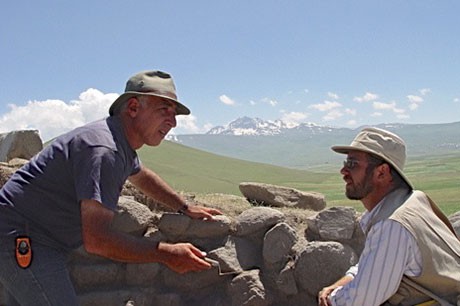
Trying to divine the future of a precarious administration, "House of Cards" President Frank Underwood enters the inner sanctum with a trusted adviser. "It's really a crapshoot," the adviser says, and the president nods. The bourbon is drained, cigars are snuffed, and the political leader emerges with a more confident sense of what's to come. 'Twas ever thus. "It really was a crapshoot, with very high stakes for sovereign rulers in a turbulent time," says Cornell archaeologist Adam T. Smith, interpreting evidence from 3,300-year-old Bronze Age shrines, ensconced within a hilltop fortress on the Tsaghkahovit Plain of central Armenia. Smith, a professor of anthropology in the College of Arts and Sciences, studies the role that the material world - everyday objects, representational media, natural and built landscapes - plays in the political lives of ancient and modern-day people. Dice-like knucklebones used for osteomancy and colored stones used for lithomancy (divination with bones and stones, respectively) were found deep within the ruins of the fallen citadel of Gegharot.
TO READ THIS ARTICLE, CREATE YOUR ACCOUNT
And extend your reading, free of charge and with no commitment.