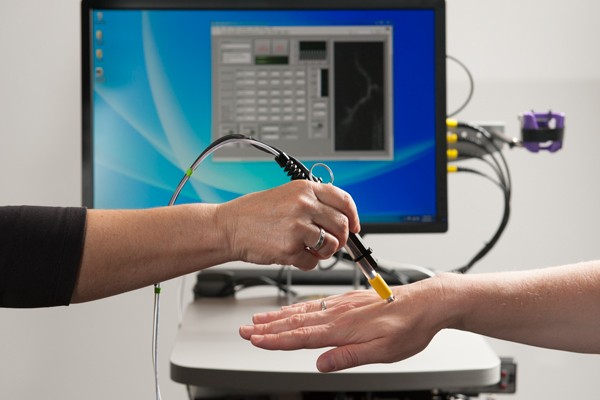
A pen-size microscope focuses a low-power laser light on a blood vessel just below the patient’s skin to register dyed cancer cells.
Cancerous tumors can shed cells that travel through the blood stream and create new cancerous growths. These seed cells can be very difficult to detect, but Stanford scientists are developing a noninvasive method using a mini-microscope that could find these cells. One of the cruelest truths about cancer is that even after you beat the disease, it can still come back to kill you. A tumor growing in the prostate gland, breast, or any other organ can shed cancerous cells into the blood. These cancerous seeds travel the body and can take root nearly anywhere, growing into a new cancer threat even after the initial cancer is treated. The rule of thumb with cancer is that the earlier you can detect the disease, the more effective the treatment, and hence better potential outcomes. Currently, doctors draw a patient's blood and analyze it using special antibodies to detect the presence of the seeds, called circulating tumor cells (CTCs).
TO READ THIS ARTICLE, CREATE YOUR ACCOUNT
And extend your reading, free of charge and with no commitment.