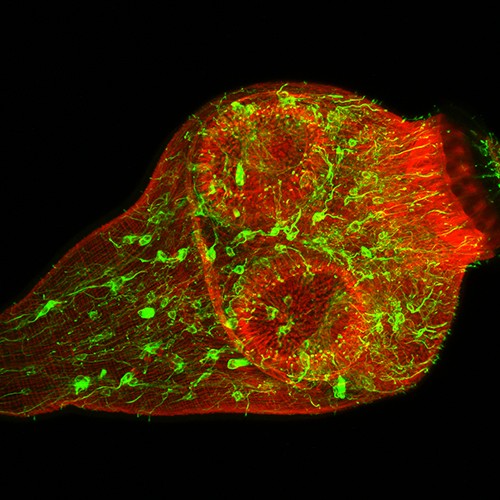
Der Kopf eines Fuchsbandwurms: Mit Saugnäpfen und einem Hakenkranz (rot) verankert sich der Parasit im Darm seines Wirtes. Grün angefärbt sind spezielle ,,Nierenzellen’, die der Entwässerung des Kopfes dienen. ( Uriel Koziol)
06/24/2015 - Professor Klaus Brehm from Würzburg is granted 750,000 euros for a new research project on tapeworms. His work may bring advances in fighting worm infections, but also in wholly different areas of medicine. Parasitic worms are a major problem worldwide, especially in developing countries. In tropical regions, for example, several million people are suffering from schistosomiasis. In the course of this infectious disease, worms damage the liver and other organs. They can even cause cancer. Millions of people are infected with tapeworms.
TO READ THIS ARTICLE, CREATE YOUR ACCOUNT
And extend your reading, free of charge and with no commitment.