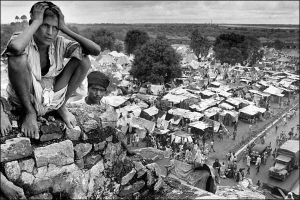
Communication is vital in the aftermath of a disaster
Smartphones could help save hundreds of thousands of lives in the aftermath of a disaster or humanitarian crisis, research from University of Manchester academics has found. Software developed by computer scientists could help to quickly and accurately locate missing people, rapidly identify those suffering from malnutrition and effectively point people towards safe zones simply by checking their phones. It is hoped the smartphone technology could potentially not only help save lives but could also ease the financial and emotional burden on aid organisations. The largest system developed by Gavin Brown and his team Peter Sutton and Lloyd Henning in the Machine Learning and Optimisation group at The University of Manchester is the REUNITE mobile and web platform. In the aftermath of a major disaster, aid workers typically people who have become separated from their families. These records are normally stored in paper form, which can be lost, damaged or illegible. Although there are systems set up to solve this issue - such as the public search facilities set up by charities such as the Red Cross - there is no universal system to provide this vital task.
TO READ THIS ARTICLE, CREATE YOUR ACCOUNT
And extend your reading, free of charge and with no commitment.