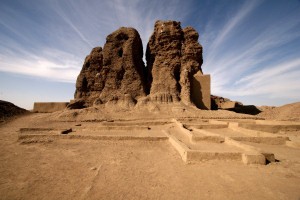
Western Deffufa, Kerma
30 Apr 2013 Researchers have solved the riddle of how one of Africa's greatest civilisations survived a catastrophic drought which wiped out other famous dynasties. Geomorphologists and dating specialists from The Universities of Aberystwyth, Manchester, and Adelaide say that it was the River Nile which made life viable for the renowned Kerma kingdom, in what is now northern Sudan. Kerma was the first Bronze Age kingdom in Africa outside Egypt. Their analysis of three ancient river channels where the Nile once flowed shows, for the first time, that its floods weren't too low or too high to sustain life between 2,500 BC and 1,500 BC, when Kerma flourished and was a major rival to its more famous neighbour downstream. They also show that the thousand year civilisation came to end when the Nile's flood levels were not high enough and a major channel system dried out - though an invasion by resurgent Egyptians was the final cause of Kerma's demise. Downstream in Egypt, a catastrophic 30 year drought 4,200 years ago, which produced low Nile floods, created chaos in the old kingdom for at least a century. Other civilisations in the near east and Mesopotamia were also severely hit by this drought.
TO READ THIS ARTICLE, CREATE YOUR ACCOUNT
And extend your reading, free of charge and with no commitment.