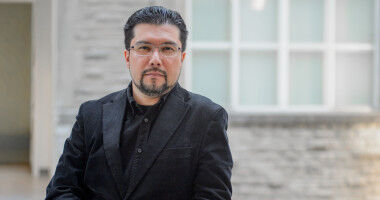
Spotlight on FMIers: Marilyn Vaccaro
At the FMI, about 25 staff in Administration — from grant experts to facility managers — offer scientists support so that researchers can focus on their science. Human Resources associate Marilyn Vaccaro started working at the FMI in 1987, when personal computers were just becoming available and DNA was sequenced using meter-long radioactive gels. We talked to Marilyn about how work practices and people at the FMI changed over the past 35 years, and how she contributes to the science done at the FMI. You started working at the FMI on January 1, 1987. Correct, I've been around a long time! [She laughs] What brought you to the FMI and how has your career evolved over the years? - After graduating from my master's in Molecular Biology in Konstanz, I was considering going back to the United States, my home country, but first checked out Basel, where my partner was working at the time. I found the FMI in the yellow pages of the telephone book and contacted them. As luck has it, there was an opening and I was offered a job as a postgraduate scientist in the research group of Jean-Pierre Jost, who was studying DNA methylation. After a few years, my partner and I started a family and relocated close to Winterthur, and I reduced my working time while our children were young. It was also then I switched to working in Human Resources (HR) [now called People & Organization (P&O) at the FMI], where I could combine my technical skills with people-oriented work. Over time, the need for more help in HR grew, so did my responsibilities and workload. What are your main tasks in your current role?