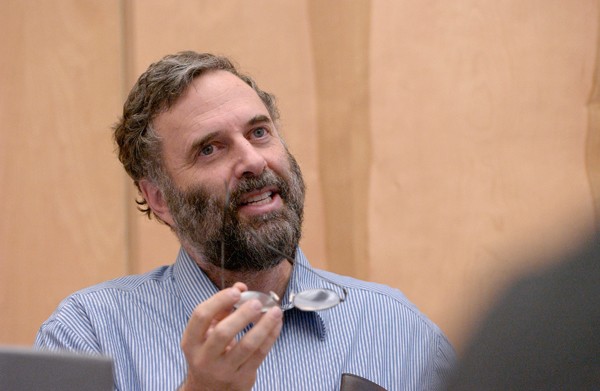
’Ordinary people are very smart collectively, if you give them a chance to grapple with the issues,’ says Stanford Professor James Fishkin, the director of the Center for Deliberative Democracy.
One weekend in June, a scientifically representative sample of California voters gathered in Torrance for the first-ever statewide "deliberative poll." Spearheaded by Stanford communication Professor James Fishkin, the gathering aimed to educate and facilitate discussion among participants, who were polled on their opinions toward a variety of statewide reforms. To drive a car in the United States, you must pass a test and acquire a license. Before you can mortgage a house or obtain a credit card, a detailed contract must be read and signed, indicating that you understand the terms of the agreement. But any registered voter is eligible to cast a ballot, even if his or her opinion is based just on campaign slogans and pithy sound bites. Similarly, telephone polls used to gauge public opinion about policy reforms do not gauge respondent knowledge or understanding. And to Stanford communication Professor James Fishkin, the director of the Center for Deliberative Democracy, that just doesn't make sense.
TO READ THIS ARTICLE, CREATE YOUR ACCOUNT
And extend your reading, free of charge and with no commitment.