The Science Museum plays a major role in encouraging children to pursue scientific careers - I was one of them - and I hope that the engineering of a trachea will be an inspiration to future generations.
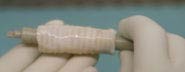
Groundbreaking work by researchers at the University of Bristol that signalled a new age in surgical care by helping to save a woman's life has been celebrated in the Science Museum's new exhibition, 'Who am I'?. From June 26 people will be able to see for themselves evidence of an international collaboration that made medical history, bringing together years of scientific and medical research in the first operation of its kind. In 2008, the first bioengineered windpipe , made from the patient's own stem cells, was successfully transplanted into a young woman whose airway had been badly damaged after a severe case of tuberculosis. The operation ultimately saved Claudia Castillo 's life by allowing to her to breathe normally again ? her only alternative would have been to remove her left lung, which would have left her impaired for life. Using a technique developed at Padua University in Italy, a seven-centimetre tracheal segment donated by a transplant donor in Spain was stripped of all its cells to leave only a scaffold of collagen. At a laboratory in Bristol, stem cells taken from Claudia's bone barrow were grown and matured into cartilage cells. A medical team in Barcelona then used an incubator to cultivate Claudia's cells and persuade them to grow on the stripped-down scaffold of the donated trachea.
TO READ THIS ARTICLE, CREATE YOUR ACCOUNT
And extend your reading, free of charge and with no commitment.