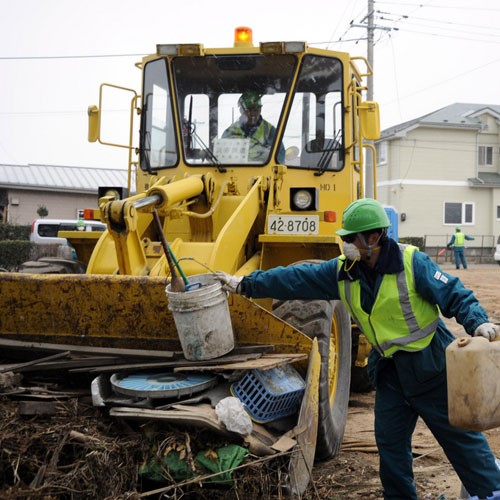
Computational science plays a key role in disaster preparedness. Debris can easily prevent rescue workers from reaching the population after a disaster. Image courtesy of PO1 Matthew Bradley via Flickr user DVIDSHUB.
Students develop hurricane response plans on Cambridge roads, gaining practical experience in computational science. Debris lingered just outside New Orleans in July 2006-almost a full year after Hurricane Katrina devastated the region. Photo courtesy of Flickr user Angie M. Photography. Imagine a powerful hurricane has wreaked havoc on the city of Cambridge, Mass. Thousands of residents are injured, but debris blocks roads everywhere, preventing medical workers from reaching the victims. Crews are mobilizing to clear paths between the victims and two medical centers, Mount Auburn Hospital and Harvard University Health Services. Which roads should they open first, in order to quickly reach the largest number of victims? How many of those roads can they actually clear each day with the equipment available? This was the problem posed to tech-savvy students participating in the IACS Computational Challenge in January.
TO READ THIS ARTICLE, CREATE YOUR ACCOUNT
And extend your reading, free of charge and with no commitment.