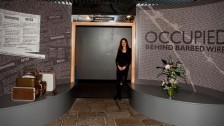
Dr Gilly Carr at the entrance to “Occupied Behind Barbed Wire”, which will be on display in Jersey until the end of 2012. Credit: Gilly Carr
A collection of artefacts made by prisoners from the Channel Islands in World War II has gone on display in Jersey to mark the 70th anniversary of the Channel Island deportations, with the help of a Cambridge researcher. The artwork and handicrafts internees made are a testament to the importance of creativity in ensuring the survival of internment." - —Gilly Carr Of the 2,200 Channel Islanders who were deported by the Nazis during World War II, most spent the war with little news of Allied progress, and uncertain about when it was all going to end. It was just one of several psychological burdens they had to endure. Crammed into internment camps hundreds of miles from home, these British citizens spent years in relative isolation, feeling frustrated, anxious and often simply bored. The best way to stop themselves from becoming depressed was to find something else to do, and they found a solution in recycling the parcels that were periodically delivered to the camps by the Red Cross. Many prisoners became accomplished craftsmen, transforming parts of these parcels, or their contents, into toys, crockery, everyday objects to help their survival, and games. When they were liberated at the war's end, these items returned with them to the islands.
TO READ THIS ARTICLE, CREATE YOUR ACCOUNT
And extend your reading, free of charge and with no commitment.