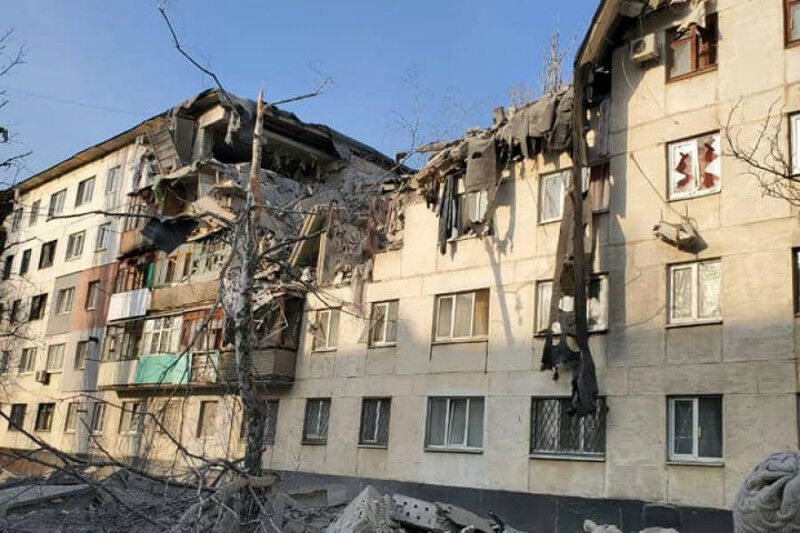
A residential building in the Ukrainian city of Lysychansk after intense shelling on March 31
A residential building in the Ukrainian city of Lysychansk after intense shelling on March 31 Perspectives on the ongoing crisis in Ukraine - Five Johns Hopkins experts discuss the nearand long-term global consequences of the conflict, including supply chain disruption, humanitarian disaster, and the heightened potential for a broader war - Now 36 days deep into Russia's invasion of Ukraine, with millions displaced and untold numbers killed or maimed, the conflict continues to rage on-despite recent ambiguous peace talks. On Wednesday a group of Johns Hopkins experts gathered virtually to discuss the global ripple effects of the ongoing crisis, both nearand long-term. Below are highlights of the event, available to watch in full here. A new Iron Curtain?. The war in Ukraine signals the end of global supply chains as we've known them, according to Tinglong Dai , professor of operations management and business analytics at the Johns Hopkins Carey Business School. Historically, he said, our supply chains have operated on two key assumptions: the separation of geopolitics and business, and the belief that rational decision-making ultimately prevails. "Obviously these assumptions have been destroyed by Russia's action in Ukraine," Dai said.
TO READ THIS ARTICLE, CREATE YOUR ACCOUNT
And extend your reading, free of charge and with no commitment.