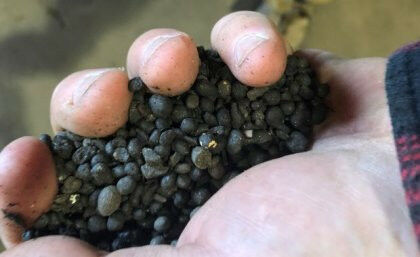
Compost granules form part of the Precision Compost Strategy. Image: Supplied
Compost granules form part of the Precision Compost Strategy. Image: Supplied A new way of using compost could boost global crop production and deliver huge benefits to the planet, according to a study co-led by The University of Queensland. Professor Susanne Schmidt from UQ's School of Agriculture and Food Sciences said adopting a Precision Compost Strategy (PCS) in large-scale agriculture could improve crop yield, soil health and divert biowaste from landfill where it generates harmful greenhouse gases. "Instead of relying just on mineral fertilisers, PCS involves supplementing the right type of compost with nutrients to match the needs of soils and crops," Professor Schmidt said. "Soils that have become compacted and acidic are then aerated and neutralised. "The result is they can retain more water, facilitate root growth and nourish the organisms that keep soils and crops healthy." Professor Schmidt said soil plays a crucial role in ensuring global food security. "But currently 30 per cent of the world's agricultural soil is classified as degraded, with projections that this could rise to 90 per cent by 2050," she said.
TO READ THIS ARTICLE, CREATE YOUR ACCOUNT
And extend your reading, free of charge and with no commitment.