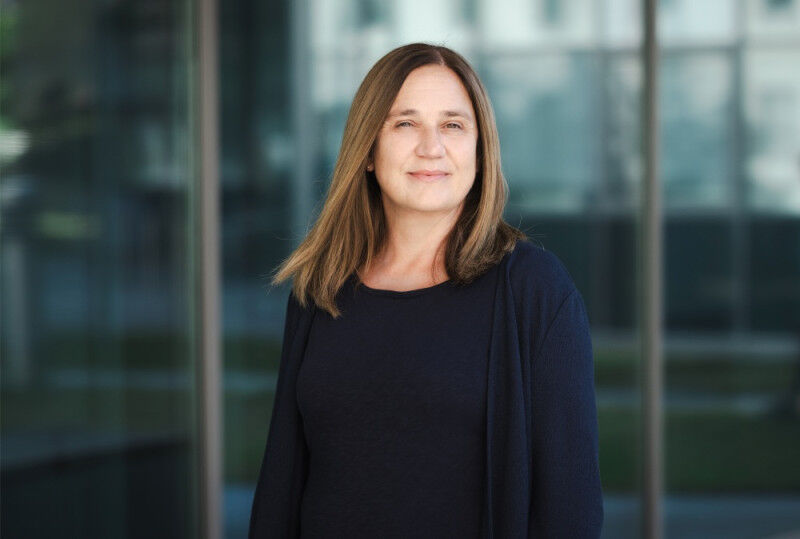
Three researchers from the Institute of Science and Technology Austria (ISTA) have been admitted to the Austrian Academy of Sciences (ÖAW): Professor Sylvia Cremer as a corresponding member of the Mathematics and Natural Sciences Class, and Assistant Professors Amelia Douglass and Alicia Michael to the Young Academy. With 46 new members, the Academy is becoming younger, more diverse, and more female.
The Austrian Academy of Sciences (ÖAW) welcomes 46 newly elected members to its ranks. In its March elections, 29 women and 17 men were admitted. This marks a turning point for the Academy: for the first time in its history, women make up the majority of members under the age of 60.
"The Academy is becoming younger, more diverse, and more female. Over 60 percent of the newly elected members are women," says ÖAW President Heinz Faßmann. "I look forward to the fresh, unconventional, and inspiring ideas and perspectives of the new members, especially the rising stars of the Young Academy."
The Academy is divided into a philosophical-historical class and a mathematical-scientific class, as well as a Young Academy, whose members are no older than 40 at the time of their election. The election of members takes place every two years, while that of the Young Academy occurs annually.
Professor Sylvia Cremer
Sylvia Cremer, who heads the "Social Immunity" research group at ISTA --as assistant professor since 2010 and as a professor since 2015--was elected as a domestic corresponding member of the Mathematical and Natural Sciences Class. She researches how ants, as social insects, fight diseases as a cooperative unit, for example through decisions regarding mutual grooming or how do deal with their own infections. Previously, Cremer worked at the University of Regensburg and the Institute of Advanced Studies in Berlin , as well as the University of Copenhagen (Denmark). She has received several prestigious awards and, in 2017, obtained a Consolidator Grant from the European Research Council (ERC).
Cremer’s induction brings the number of ISTA research group leaders who are members of the Academy of Sciences to six. Current members also include ISTA Professors Herbert Edelsbrunner, László Erdös, Monika Henzinger, Thomas A. Henzinger, and Robert Seiringer.
Assistant Professors Amelia Douglass and Alicia Michael
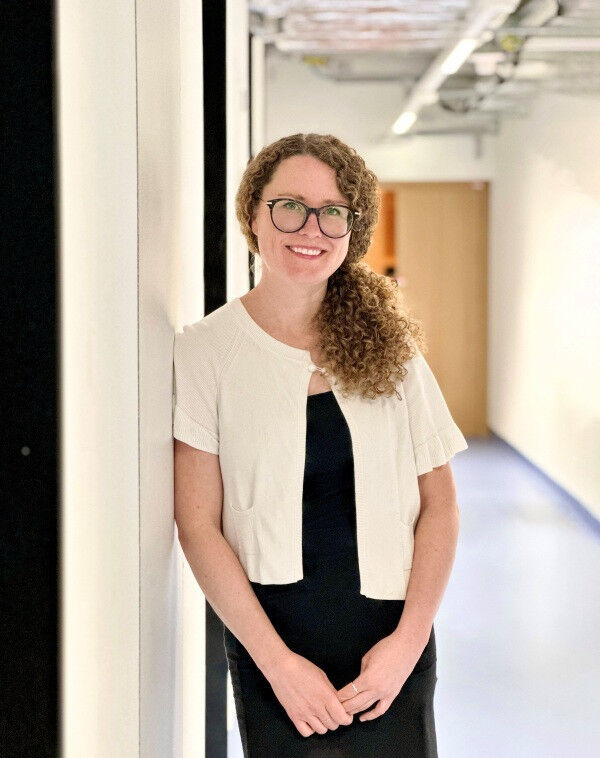
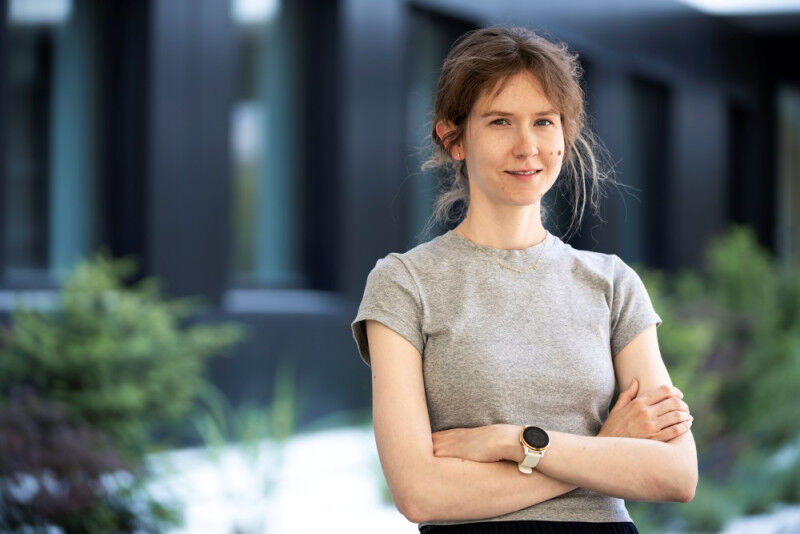
Amelia Douglass and Alicia Michael, both assistant professors at ISTA, have been admitted to the Young Academy of the ÖAW.
Alicia Michael has led the research "Genome Regulation and Biological Timekeeping" research group at ISTA since 2024 and investigates how cells keep track of time. Using tiny green algae as a model, she investigates how nearly all life has adapted to Earth’s day-night rhythm. Previously, Michael worked at the University of Basel’s Friedrich Miescher Institute for Biomedical Research in Basel (Switzerland) and at the University of California, Santa Cruz (USA).
Amelia Douglass has led the research group "The Neurobiology of Homeostasis" at ISTA since 2025, studying communication between the brain and body in mice. This research could provide insights into stress and anxiety in humans. Previously, she worked at Harvard Medical School (USA) and the Max Planck Institute for Neurobiology. In 2025, she received a Starting Grant from the European Research Council (ERC).
ISTA has seven members in the Young Academy
Both new members will now add their expertise to the Young Academy and bring the total number of ISTA research group leaders currently represented to seven. In 2024, ISTA physicists Kimberly Modic and Hryhoriy Polshyn were admitted, and ISTA Assistant Professor Edouard Hannezo --who works at the intersection of cell biology and theoretical physics-was inducted in 2022. Also representing ISTA are physicists Scott Waitukaitis (since 2021) and Mikhail Lemeshko (since 2020).