Tracing cyanobacteria’s tree of life in Earth’s extreme environments
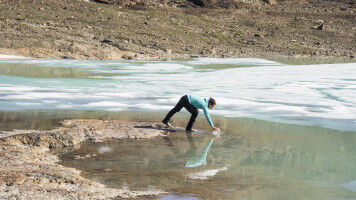
The tree of life of cyanobacteria, a key group of microorganisms widely considered to be the most successful on Earth, which emphasises cyanobacteria from extremely cold habitats such as the Poles and the high mountains on every continent, has been reconstructed by Dr Patricia Sánchez-Baracaldo and colleagues from the Glaciology Centre in Bristol's School of Geographical Sciences. Once considered inhospitable masses of ice, polar and alpine regions thrive with microbial life. Cyanobacteria have adapted to these extremely cold and hostile environments where essential nutrients are very limited. These microorganisms are capable of transforming energy from sunlight into sugars using carbon dioxide and water. Dr Sánchez-Baracaldo said: "Our analyses have revealed that some cyanobacteria adapted to extreme cold environments independently at different times in Earth's history. In fact, we see that cyanobacteria capable of coping with extreme cold habitats are found across the cyanobacteria tree of life." The researchers also found that some cyanobacteria from the Arctic and Antarctica share a common ancestor. This suggests that they go far back in history to a time when the Earth was covered with ice.