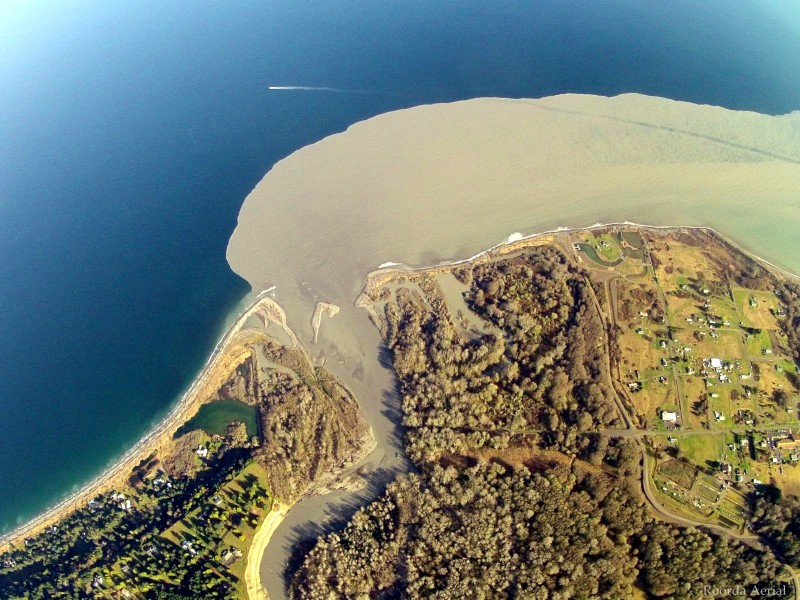
Tom Roorda A century of accumulated sediment fans out at the Elwha river mouth.
Salmon are beginning to swim up the Elwha River for the first time in more than a century. But University of Washington marine geologists are watching what's beginning to flow downstream — sediments from the largest dam-removal project ever undertaken. The 108-foot Elwha Dam was built in 1910, and after decades of debate it was finally dismantled last year. Roughly a third of the 210-foot Glines Canyon Dam still stands, holding back a mountain of silt, sand and gravel. Removal of the upper dam was halted in January while crews repair a water-treatment plant near Port Angeles that got clogged with leaves and other debris. For engineers, this phase may be the trickiest part of the dam-removal project. For oceanographers, "the best is yet to come,” said Charles Nittrouer , a UW professor of oceanography and of Earth and space sciences.
TO READ THIS ARTICLE, CREATE YOUR ACCOUNT
And extend your reading, free of charge and with no commitment.