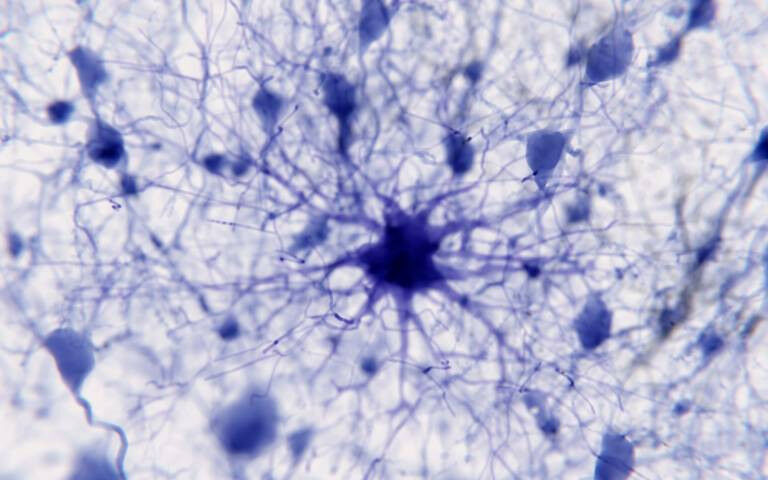
Protoplasmic astrocytes play an active role in neuronal communication through synapses and regulation of neural circuit function.
Protoplasmic astrocytes play an active role in neuronal communication through synapses and regulation of neural circuit function. Biotech company AstronauTx, aiming to develop novel treatments for Alzheimer's disease and other neurodegenerative disorders, has closed a £48m ($61m) Series A financing. The company was launched in 2019 and spun out from UCL Business (UCLB), the commercialisation company for UCL, initially building on research from the Alzheimer's Research UK UCL Drug Discovery Institute (UCL DDI). The UCL DDI is positioned to couple the deep disease knowledge and biology expertise of the academic community at UCL and further afield with industry-standard drug discovery approaches, to rapidly translate emerging innovations into new medicines. AstronauTx and the UCL DDI have an ongoing drug discovery collaboration to develop new medicines that reset the behaviour of astrocytes, crucial support cells in the brain. Astrocytes are normally very important for keeping nerve cells functioning well, but they change in Alzheimer's disease and instead become damaging. Professor Paul Whiting (UCL Queen Square Institute of Neurology) is among the company's co-founders.
TO READ THIS ARTICLE, CREATE YOUR ACCOUNT
And extend your reading, free of charge and with no commitment.