My project will use the history of the gardens to enrich our understanding of Hunter and Jenner, their relationship and their experimental natural history work in reference to their medical practice.
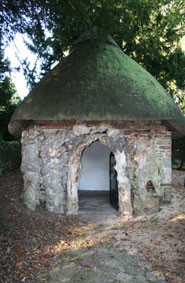
Two pioneering eighteenth-century doctors and the unusual uses to which they put their gardens are the focus of a new study by a Bristol University historian. Funded by a grant from the Wellcome Trust , Dr Clare Hickman of the Department of Archaeology and Anthropology will investigate how surgeon John Hunter (1728-93) and vaccination pioneer Edward Jenner (1749-1823) used their gardens to further their outstanding medical activities. John Hunter's garden at Earl's Court, London housed a menagerie of exotic and domestic animals that he employed for observation, experimentation and dissection - activities which were directly related to his pioneering surgical work. This garden eventually took on mythological status: in one illustration produced soon after Hunter's death a two headed beast is shown wandering around it. Edward Jenner also used his garden and the surrounding landscape at Berkeley, Gloucestershire, to observe the natural world and conduct experiments. Through this work, Jenner developed his insight into smallpox which eventually led to his developing a life-saving vaccine for the disease. He also built a small rustic hut in the garden - dubbed the 'Temple of Vaccinia' - in which he vaccinated the poor of the area against the disease free of charge.
TO READ THIS ARTICLE, CREATE YOUR ACCOUNT
And extend your reading, free of charge and with no commitment.