tiny worm faecal pellets and fossils Matthew Kuo
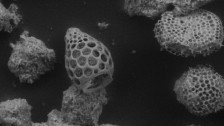
I have discovered that sediments from these areas contain millions of tiny faecal pellets that have been produced by burrowing invertebrates (worms)" - —Matthew Kuo Under the Microscope is a collection of videos that show glimpses of the natural and man-made world in stunning close-up. They are released every Monday and Thursday and you can see them here: io9.com. Matthew Kuo: - "I have a research interest in the geotechnical behaviour and biological origin of deep ocean clay crusts. These crusts are found in many areas that are of particular importance to offshore oil and gas developments, including the Gulf of Guinea, Gulf of Mexico and the Mediterranean Sea. I have discovered that sediments from these areas contain millions of tiny faecal pellets that have been produced by burrowing invertebrates (worms). These pellets, whose abundance in the sediment may range from 30% to 60% by dry mass, are robust and much stronger than undigested material. Their presence and mechanical behaviour can therefore explain the existence of the observed crusts.
TO READ THIS ARTICLE, CREATE YOUR ACCOUNT
And extend your reading, free of charge and with no commitment.