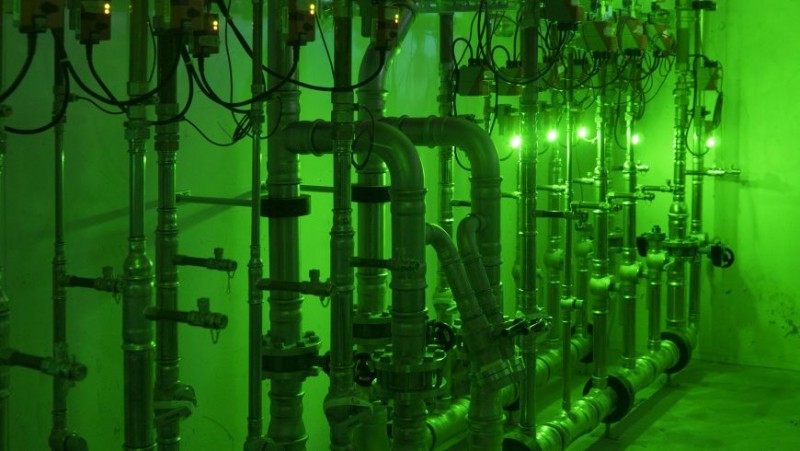
A combination of 13 different storage systems and energy sources supplies the futuristic residential area in the research building NEST and the vehicle pool of move, Empa’s future mobility demonstrator. The optimum control of such complex supply networks has never really been investigated - or tested in actual operation. The Energy Hub (ehub) demonstrator is set to change all this and should provide insights into a safe and sustainable energy of the future.
How can we organize energy supply in the post-fossil era? How can energy be stored efficiently? And how can we organize distribution as economically and conveniently as possible? Empa's research platform 'ehub? is searching for answers to these questions. The 'NEST' research building on the Empa campus in Dübendorf proudly shows off its research projects assembled on open platforms: the wooden façade of the 'Vision Wood' unit, the projecting meeting rooms of the 'meet2create' office experiment and soon the glass façade of the 'Solar Fitness & Wellness' unit spanning two floors. Yet a decisive - and perhaps the most visionary - part of the research work is hidden behind the scenes. The NEST research modules and the mobility demonstrator 'move' are connected via an innovative and particularly flexible energy network. Together they form a kind of neighborhood of the future, which could demonstrate how we should design and operate energy supply in our cities over the next decades. Homes of the future can self-supply with energy for extended periods. However, they are not entirely independent.
TO READ THIS ARTICLE, CREATE YOUR ACCOUNT
And extend your reading, free of charge and with no commitment.