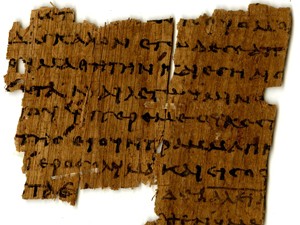
Oxyrhynchus Papyrus 5072 (3rd century AD), Uncanonical Gospel Photo courtesy of the Egypt Exploration Society and Imaging Papyri Project, Oxford
MINNEAPOLIS / ST. PAUL (07/28/2011) —University of Minnesota researchers are part of an international collaboration launched this week by Oxford University and the Egypt Exploration Society that applies the analysis tools of astrophysics with archeology to help decipher a collection of ancient Egyptian papyri. Physics and astronomy associate professor Lucy Fortson in the College of Science and Engineering will lead the University of Minnesota team that includes faculty and staff from the Classical and Near Eastern Studies Department in the College of Liberal Arts and the Minnesota Supercomputing Institute. The collaborative project, called Ancient Lives, is putting hundreds of thousands of images of fragments of papyri written in Greek online. The collection, named the Oxyrhynchus Papyri, was excavated more than a hundred years ago yet archeologists and classics scholars have only managed to transcribe a small percentage of these fragments. "It's like if you have thousands of puzzles, take all the pieces and mix them together in one big box. Then you try to put the puzzles together," Fortson said. "It's an enormous task." Because of the huge number of images involved, researchers need volunteers from the public to look through and catalog them or transcribe the text using a simple web interface, which displays both known and unknown texts.
TO READ THIS ARTICLE, CREATE YOUR ACCOUNT
And extend your reading, free of charge and with no commitment.