The European Research Council is providing millions of euros in funding for projects from the fields of economics, evolutionary biology and computer science
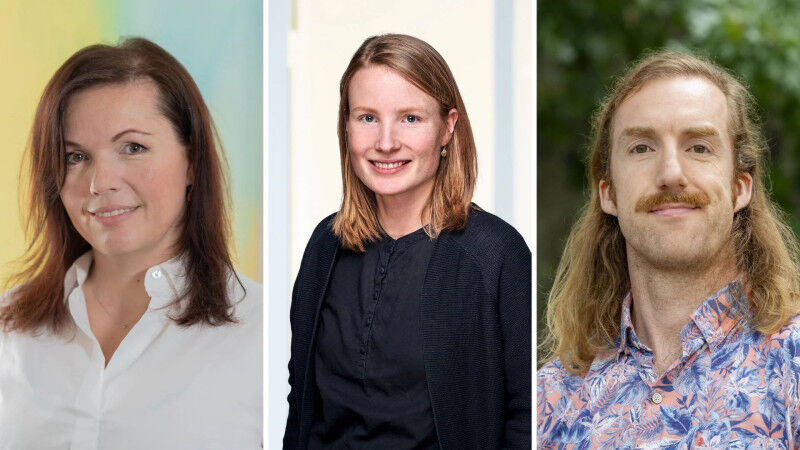
With the ERC Starting Grant, the ERC supports researchers of all nationalities with two to seven years of experience since completing their doctorate. Applicants must have a promising scientific track record and submit an outstanding project proposal on behalf of their host institution. The PI does not need to be employed by the host institution at the time of proposal submission, but a mutual agreement and commitment are necessary if the proposal is successful. Funding is usually provided for five years with a grant of up to €1.5 million. Further information is available at https://erc.europa.eu/apply-grant/starting-grant
Demographic change is leaving its mark on labor markets, with the workforce getting older and many experienced workers moving into retirement. Companies are urgently hunting for young talent to replace them, and yet the youth employment rate remains high in many countries. "We need a sound empirical understanding of entry-level labor markets to find effective answers to this phenomenon," explains Assistant Professor Amelie Schiprowski. Theeconomist was appointed to the Cluster of Excellence "ECONtribute: Markets & Public Policy" of the Universities of Bonn and Cologne in 2019. In her project entitled "Entry-Level Hiring in Tightening Labor Markets: Frictions, Firm Heterogeneity and Public Policy" (ENTRYHIRE), which is being funded by the European Research Council (ERC), she studies how firms hire and train entry-level employees in the face of tightening labor markets.
"I will analyze how demographic change is altering the ’matching process’ between young workers and firms," Schiprowski explains. What factors are complicating this process? What is the impact of labor market policy? By finding answers to these questions, Schiprowski is hoping to furnish an evidence base for public policy interventions that will improve the matching between young talent and companies. She is focusing primarily on the German training and apprenticeship market, which serves as an empirical "laboratory" for analyzing entry-level labor markets.
The ERC will be funding her project to the tune of some €1.5 million in funding over five years. Assistant Professor Schiprowski is extremely pleased with her funding: "The grant will give me the financial resources and the time I need to build a rich data base together with a team of postdocs and doctoral students, and thus answer novel research questions."
Amelie Schiprowski studied economics at Sciences Po and École Polytechnique in Paris before going on to obtain her doctorate from the University of Potsdam in 2018. Since 2019, she is an Assistant Professor at the University of Bonn’s Department of Economics. Amelie Schiprowski is a member of the ECONtribute Cluster of Excellence at the Universities of Bonn and Cologne as well as the Individuals and Societies Transdisciplinary Research Area at the University of Bonn. She is also principal investigator in the "Economic Perspectives on Societal Challenges: Equality of Opportunity, Market Regulation, and Financial Stability" Collaborative Research Center, which is split between the Universities of Bonn and Mannheim. In 2020, she was awared the Joachim Herz Award in Economics.
Assistant Professor Amelie Schiprowski from the ECONtribute Cluster of Excellence has been awarded an ERC Starting Grant worth €1.5 million.
Shimmering wings in green, blue, and turquoise like those of the peacock swallowtail from Indonesia; brown wings with spots that resemble eyes and scare off predators, like in the owl butterfly; or leaf-shaped wings in the delicate yellow-green of the brimstone butterfly: the wings of butterflies and moths display an enormous diversity of colors and patterns, the evolutionary origins of which are still not fully understood. ’We know that many of these patterns have the purpose of signalling to conand heterospecifics,’ explains Dr Moritz Lürig, who is currently a researcher at the Florida Museum of Natural History at the University of Florida. ’Many species of butterflies and moths use them to deter predators or attract mates, for example.’ New studies show that these complex patterns are often based on only a few genes and regulatory elements. ’This raises a key question: How could such enormous diversity develop from such a limited genetic basis?’
With his ERC project, ’The Evolution of Wing Coloration in Lepidoptera (EWINCOL)’, Lürig is investigating precisely this question. Using Artificial Intelligence (AI), he will analyse millions of digitised images of preserved butterflies and moths from natural history museums around the world. "These museums are valuable research archives and publicly accessible repositories of knowledge. Their digitisation opens up new ways of making biological diversity visible and more accessible," says Lürig enthusiastically. His goal is to create a comprehensive database of the wing colour patterns, of all the major groups of Lepidoptera (butterflies and moths), the second largest insect order after beetles. "This digital ’wing atlas’ will enable me to tackle three questions: first, how colours have changed during evolution and whether they are related to speciation, second, whether colour and shape evolved independently of each other, and third, how environmental factors such as light, habitat or temperature shape the global distribution of wing colour patterns."
Combining computer science and biology, EWINCOL will develop open AI tools and contribute to a better understanding of biological diversity, with applications in biological research, museum curation, biodiversity monitoring, and science communication. This would not be possible without the ERC Starting Grant: "With this funding, I can build an interdisciplinary team to analyse millions of images and create new approaches at the interface of AI and evolutionary biology," says Moritz Lürig. "Without the funding, this would not be possible on this scale or time frame."
Moritz Lürig studied Environmental Sciences at the University of Oldenburg, earning a Bachelor’s degree, and Marine Environmental Sciences, earning a Master’s degree. In 2019, he received his doctorate from ETH Zurich. This was followed by postdoctoral positions at the Eawag water research institute in Switzerland and Lund University in Sweden. Since September 2023, he has been conducting research at the Florida Museum of Natural History at the University of Florida.
AI systems such as ChatGPT are increasingly influencing our daily decisions, whether we are trying to cope with mental health issues or looking for information. However, these systems often fail precisely at the moments when empathy, judgement and social understanding are most important. This is where the ’LLMpathy’ project, led by Lucie Flek from the Institute of Computer Science at the University of Bonn, comes in. The project’s goal is to make AI not just smarter but socially intelligent. The ERC is funding 5 million over five years.
"Today’s AI can mimic empathy, but it doesn’t actually understand you," says Lucie Flek. ’We want to teach machines to empathise, to consider human emotions and behaviour, and to respond meaningfully to personality, values, and social situations, rather than just offering general advice.’
To achieve this, Flek will create in-depth human models in the form of statistical profiles based on psychological traits such as empathy, impulsivity, or trust. ’These models can be used to guide AI decisions in high-risk social scenarios such as conflict resolution, negotiations, and mental health support.’
Using a large-scale psychological study, Lucie Flek will link human data to AI development and evaluation, creating a transparent feedback loop between people and machines. "This allows AI to explain why it has made a particular suggestion, based on the information it has about the person it is communicating with," the computer scientist explains.
LLMpathy therefore also serves to protect users: it helps to identify when AI systems use personalisation in an unethical manner, for example to emotionally pressure someone into making a purchase or to spread misinformation tailored to their fears. ’We need to understand how personalisation works in order to protect people from its misuse,’ says Dr Flek. ’LLMpathy gives us the tools to do that.’ The aim of the project is to develop open-source tools, benchmarks and simulation platforms to ensure that future AI meets high standards of transparency, trustworthiness and ethical behaviour - in line with the EU’s forthcoming AI Act.
The project’s outcomes will include open-source tools, benchmarks, and simulation platforms to ensure that future AI systems meet high standards for transparency, trustworthiness, and ethical behavior-goals aligned with the EU’s upcoming AI Act.
Professor Lucie Flek is the head of the Data Science and Language Technologies group at the Bonn-Aachen International Center for Information Technology (b-it) at the University of Bonn, and a member of the Transdisciplinary Research Area (TRA) ’Modelling’. As Area Chair for Natural Language Processing (NLP) at the Lamarr Institute for Machine Learning and Artificial Intelligence, she connects this work with her research on machine learning for natural language processing, including AI robustness and security. Prof. Flek has been active both in academia and industry, including with Amazon Alexa and Google Shopping Search in Europe. Her academic work at the University of Pennsylvania and University College London revolved around user modeling from text, and its applications in psychology and social sciences.
Computer scientist Lucie Flek from the University of Bonn receives an ERC Starting Grant worth €1.5 million.