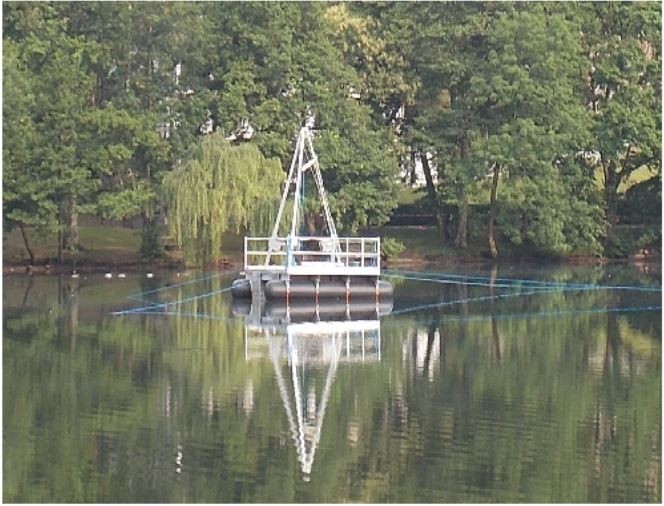
 Taking samples at Lago d’Origlio (TI).
Media releases, information for representatives of the media Media Relations (E) A new technique makes it possible to cost-effectively analyse genetic material from fossil plant and animal remains. Researchers from the Swiss Federal Institute for Forest, Snow and Landscape Research WSL and the universities of Lausanne and Bern have used this technique to examine the DNA of silver fir needles found in lake sediment in Ticino. They found clues as to how forests reacted to the emergence of agriculture. The new process utilises the latest advances in DNA technology to isolate ancient DNA (aDNA) from prehistoric plants and animals. The techniques used to date are, however, expensive. "As population geneticists often need several dozens samples to make reliable statements, many research ideas are not currently financially viable," says Nadir Alvarez, a professor at the University of Lausanne's Department of Ecology and Evolution. The research team led by Alvarez and his colleagues Christoph Sperisen (a population geneticist at the WSL), Willy Tinner (a professor of palaeoecology at the University of Bern) and Sarah Schmid (a biologist from the University of Lausanne) has now developed a cost-effective alternative and demonstrated its potential with subfossil silver fir needles found at Origlio lake in Ticino.
TO READ THIS ARTICLE, CREATE YOUR ACCOUNT
And extend your reading, free of charge and with no commitment.
Your Benefits
- Access to all content
- Receive newsmails for news and jobs
- Post ads