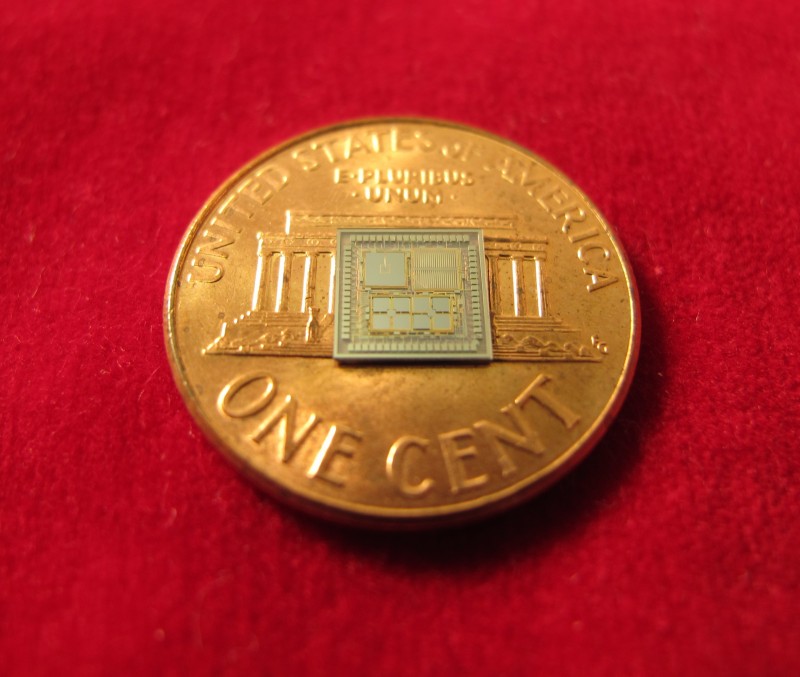
This tiny "timing inertial measurement unit" could take over when GPS is unavailable. Image courtesy of Becky Peterson
ANN ARBOR-In a pellet of glass the size of an apple seed, University of Michigan engineering researchers have packed seven devices that together could potentially provide navigation in the absence of the satellite-based Global Positioning System (GPS. Space-based GPS - convenient for civilians and essential for the military - is far from fail-proof. It doesn't work indoors, near tall buildings or in heavy cloud cover, and it's relatively easy to jam, researchers say. "In some cases, there is no good solution for that yet," said Khalil Najafi, the Schlumberger Professor of Engineering and chair of electrical and computer engineering. "That's one of the reasons there's interest in developing this technology." So-called "timing and inertial measurement units" similar to this new one are used nowadays as motion sensors in cell phones, game controllers and automotive systems, but the performance of these silicon sensors isn't good enough for navigation, positioning and guidance across larger distances or long times. Inertial sensors have been used to navigate ships and aircraft since long before GPS. Those still in use today in these vehicles are much larger.
TO READ THIS ARTICLE, CREATE YOUR ACCOUNT
And extend your reading, free of charge and with no commitment.