Every year, Country Overshoot Day marks the day on which a country’s annual biocapacity budget would be exhausted if everyone in the world lived as much as its population. In Germany, this day will fall on May 3 in 2025, more than three months earlier than in the previous year. At the b-ACTmatter research and transfer center at Leipzig University, innovative approaches are being researched to counteract the growing scarcity of resources with a growing world population through sustainable production processes and cycle-oriented technologies. The aim is to reduce plastic pollution with the help of CO2 and methane, says project manager Dr. Rohan Karande in an interview:
Greenhouse gas emissions, plastic pollution and protein shortages are existential threats and pose enormous challenges for Europe and the world. How can science turn these threats into opportunities?
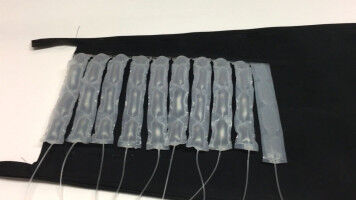
As part of the REPLACER project funded by M’ERA.Net, we are developing a new generation of hybrid living materials (HLMs) together with the Leibniz Institute of Surface Engineering (IOM) in Leipzig, the University of Latvia in Riga and the Romanian technology company Holisun. These HLMs are designed to capture greenhouse gas emissions, reduce plastic pollution and provide a sustainable source of alternative proteins. We develop the HLMs by cultivating microbial biofilm consortia in porous plastic structures, especially in recycled PET. By utilizing the synergistic effects of the biofilm-forming photoautotrophic and methanotrophic strains, a high biomass for sustainable protein substitutes in food and feed will be efficiently produced.
How can this be achieved?
By incorporating biofilms of mixed species into porous materials, we can bind greenhouse gases such as carbon dioxide and methane - as produced in biogas plants - and convert them into valuable microbial proteins to close the economic cycle. This HLM-based process offers a sustainable alternative to fossil raw materials and addresses both environmental concerns and the growing demand for proteins. We have currently developed lab-scale HLM-based photobioreactors (Technology Readiness Level 3) that can produce several grams of biomass per day.
What’s next for this technology?
The next milestone is scaling up to one kilogram of biomass per day. With the support of SMILE , the start-up initiative at Leipzig University, the team is researching future applications and commercialization strategies. Although founding a start-up at this early stage would be ambitious, it is a possible next step. This interdisciplinary project shows how scientific innovation can bring about meaningful change by transforming today’s environmental problems into solutions for a sustainable future.
Background b-ACTmatter
b-ACTmatter was founded in 2021 and established with the support of the federal STARK program and the Free State of Saxony. The Center for Bioactive Matter develops environmentally friendly materials and technologies based on biological resources. REPLACER is part of "M’ERA.NET Call 2022", a network funded by the European Union, which was founded in 2012 to jointly promote the fields of materials research and materials technologies through national and regional funding organizations, including the Free State of Saxony. Together with partners such as the Biotechnological-Biomedical Center (BBZ) at Leipzig University, b-ACTmatter is planning to establish a venture lab to bring innovations to industry in a targeted manner.