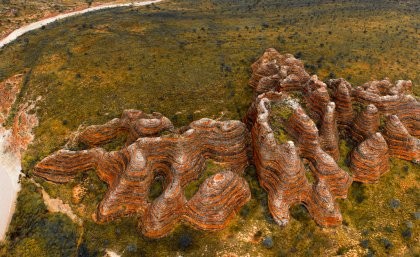
Purnululu National Park is home to the Bungle Bungle Range
Less than two per cent of wilderness is currently protected in global World Heritage sites - but many opportunities exist to increase this figure. An international study , led by University of Queensland researchers, urges the UNESCO World Heritage Convention to better conserve wilderness areas within Natural World Heritage Sites (NWHS). Lead author and UQ School of Earth and Environmental Sciences PhD student James Allan said the study revealed only 1.8 per cent of the world's wilderness is protected in these sites. "While some sites like the Okavango Delta in Botswana and Purnululu National Park in Australia both have excellent wilderness coverage, there are broad gaps in wilderness coverage across the globe," Mr Allan said. "Our study identifies protected areas within these gaps, for example the Hukaung Valley Tiger Reserve in Myanmar or Eduardo Avaroa Andean Fauna Reserve in Bolivia. "They have good wilderness coverage and may warrant consideration for World Heritage Status." Mr Allan said globally important wilderness areas were increasingly being shown as not only strongholds for endangered biodiversity, but critical in the fight to abate climate change. They also play a key role in regulating local climates, and supporting many of the world's most culturally diverse - but politically and economically marginalised - communities." "Despite their importance, wilderness areas are being destroyed at an alarming rate and need urgent protection," Mr Allan said.
TO READ THIS ARTICLE, CREATE YOUR ACCOUNT
And extend your reading, free of charge and with no commitment.