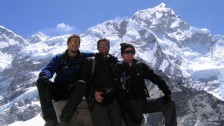
Dr Andrew Murray (far right) with his colleagues Dr Nick Knight and Dr Cameron Holloway on the approach to Everest Base-camp Credit: Andrew Murray
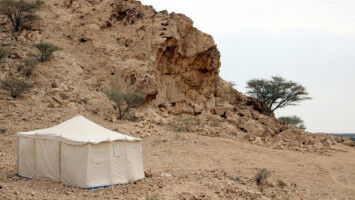
In the first of a series of reports contributed by Cambridge researchers, physiologist Andrew Murray studies responses to extreme altitude as part of a programme that will improve hospital treatments for critically ill-people. I'm breathless from simply pulling on my boots, but as I step into daylight, I gaze at the mountain giants around us: Pumori, Lhotse, Nupste, and the mother goddess of the world herself, Sagarmatha - Mount Everest." - —Dr Andrew Murray - I won't sleep well tonight, not with the nightmarish sounds coming from the sleeping bag next to me. Nick, my PhD student-cum-tentmate, has been struggling to control his breathing for the past hour and I recognise the classic signs of Cheyne-Stokes respiration. I wonder whether to be more perturbed by this human terror or the night's external soundtrack - the rumble of an avalanche on the South Col and the shotgun-like cracks in the ice of the Khumbu Glacier on which our tent is pitched. My most pressing concern is closer to home. My kidneys have been working overtime to fine-tune my blood pH, helping me to acclimatise and my bladder is fit to burst. It's -20°C outside and a toasty -7°C in the tent, so I'm not moving until morning.
TO READ THIS ARTICLE, CREATE YOUR ACCOUNT
And extend your reading, free of charge and with no commitment.