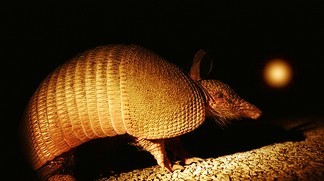
Study confirms human contamination through contact with armadillos - Using advanced DNA analysis and extensive field work, an international research team has confirmed the link between leprosy infection in Americans and the presence of armadillos. In a joint collaboration between the Global Health Institute at EPFL in Switzerland and the National Hansen's Disease Program, clear evidence was found that a never-before-seen strain of Mycobacterium leprae has emerged in the Southern United States and that it is transmitted through contact with armadillos carrying the disease. The results will be published on April 28th in the New England Journal of Medicine. There are only around 150 cases of leprosy in the United States each year. Most of these individuals have lived or worked abroad in areas in which leprosy is endemic, making it likely that they have acquired the disease while outside the US. But, to the alarm of health authorities, a third of all patients infected appear to have contracted the disease locally. The hypothesis that the disease is transmitted though contact with armadillos—aside from humans, the only other known carriers of the leprosy-causing bacteria—was confirmed by fine-grained DNA analysis of both armadillo and human samples done at EPFL.
TO READ THIS ARTICLE, CREATE YOUR ACCOUNT
And extend your reading, free of charge and with no commitment.
Your Benefits
- Access to all content
- Receive newsmails for news and jobs
- Post ads