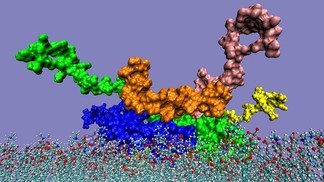
Elucidating the role of C-terminal post-translational modifications using protein semisynthesis strategies: α-synuclein phosphorylation at tyrosine 125. Several post-translational modifications (PTMs) of the protein alpha-synuclein have been shown to be associated with the pathology of Parkinson's disease (PD) and/or correlate with disease progression. However, the mechanisms by which these modifications influence the function of this protein and contribute to the initiation and progression of neuron loss in PD remain unknown. This is partly due to the lack of knowledge about the enzymes that regulate these modification and absence of tools and methodologies for the site-specific introduction of single or multiple modifications in α-syn. To address this knowledge gap, the Lashuel's group at the Brain Mind Institute has applied approaches that combine the powers of chemistry and recombinant protein expression to develop new strategies that enables the site-specific introduction of single or multiple PTMs into α-synuclein and the preparation of homogeneously modified forms of the protein in milligram quantities. The Lashuel's group have now developed semisynthetic approaches that will allow, for the first time, the preparation and characterization of all disease-associated modified forms of alpha synuclein. This achievement represents an important advance toward unraveling the roles of PTMs in determining α-syn structure, aggregation and functions in health and disease.
TO READ THIS ARTICLE, CREATE YOUR ACCOUNT
And extend your reading, free of charge and with no commitment.
Your Benefits
- Access to all content
- Receive newsmails for news and jobs
- Post ads