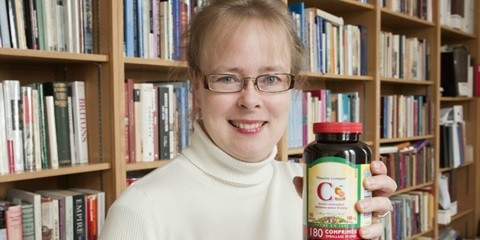
Jane Samson’s research into sailors’ historical accounts of scurvy helped reveal a link between vitamin C deficiency and brain chemistry. (Photo: Richard Siemens)
Interdisciplinary teamwork in the library and the lab leads to discovery about vitamin C deficiency. In 1850, a group of seven British missionaries set sail for the southern tip of Argentina with hopes of bringing Christianity to the indigenous people of what was then Patagonia. Unfortunately, the voyage would end in disaster a year later as all seven would eventually succumb to some combination of scurvy and starvation. The ill-fated mission was chalked up as a classic study in poorly planned trips that were doomed from the outset, and for more than 150 years, accounts of the expedition were passed over in favour of outwardly more juicy subject matter. But now, thanks to a University of Alberta historian and medical questions being raised in the humanities, the group's efforts will not be in vain after all. Jane Samson , a U of A historian of Victorian exploration, empire and missionary movements, was contacted in 2011 by Jonathan Lamb, who works in the area of 17thand 18th-century exploration literature at Vanderbilt University. Lamb had become curious about a neglected dimension of the historical literature on scurvy, namely the evidence of neurological symptoms.
TO READ THIS ARTICLE, CREATE YOUR ACCOUNT
And extend your reading, free of charge and with no commitment.