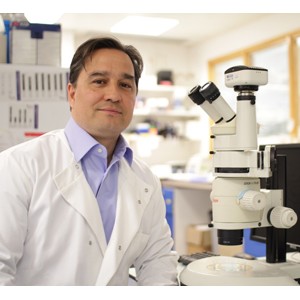
Robin Ali, UCL Institute of Ophthalmology (Credit: UCL)
UCL scientists have carried out the first successful transplant of light-sensitive photoreceptor cells extracted from a synthetic retina, grown 'in a dish' from embryonic stem cells. When transplanted into night-blind mice these cells appeared to develop normally, integrating into the existing retina and forming the nerve connections needed to transmit visual information to the brain. The study, funded by the Medical Research Council (MRC) and published today , suggests that embryonic stem cells could in future provide a potentially unlimited supply of healthy photoreceptors for retinal cell transplantations to treat blindness in humans. The loss of photoreceptors - light sensitive nerve cells that line the back of the eye - is a leading cause of sight loss in degenerative eye diseases such as age-related macular degeneration, retinitis pigmentosa and diabetes-related blindness. There are two types of photoreceptor in the eye - rods and cones. Rod cells are especially important for seeing in the dark as they are extremely sensitive to even low levels of light. The new 3D technique more closely mimics normal development, which means we are able to pick out and purify the cells at precisely the right stage to ensure successful transplantation.
TO READ THIS ARTICLE, CREATE YOUR ACCOUNT
And extend your reading, free of charge and with no commitment.