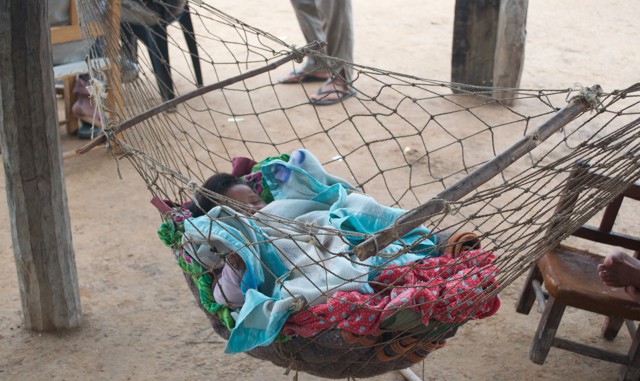
A Toba/Qom child sleeps. U of Washington
Blame smartphone alerts, constant connectivity and a deluge of media for our society's sleep deprivation. But the root cause of why we get less sleep now than our ancestors did could come down to a much simpler reason: artificial light. New research comparing traditional hunter-gatherer living conditions to a more modern setting shows that access to artificial light and electricity has shortened the amount of sleep humans get each night. The research, published online this week in the Journal of Biological Rhythms , is the first study to document this relationship in the field. "Everything we found feeds what we had predicted from laboratory or intervention studies, where researchers manipulate certain aspects of light exposure. But this is the first time we've seen this hold true in a natural setting,” said lead author Horacio de la Iglesia , a University of Washington biology professor. The researchers compared two traditionally hunter-gatherer communities that have almost identical ethnic and sociocultural backgrounds, but differ in one key aspect - access to electricity.
TO READ THIS ARTICLE, CREATE YOUR ACCOUNT
And extend your reading, free of charge and with no commitment.