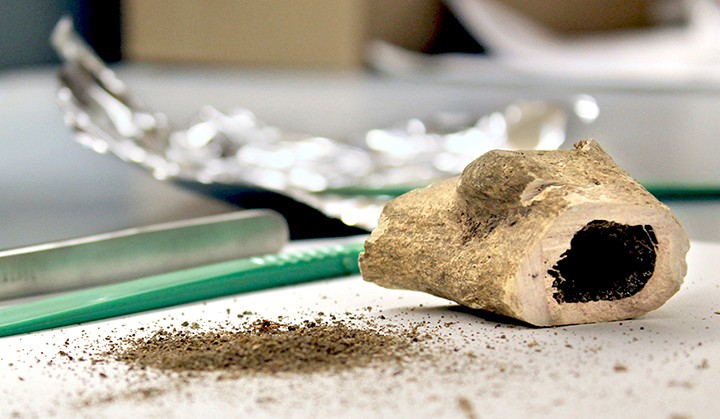
A new method for isolating hemozoin from archaeological bone involves scraping material from bone marrow and later grinding it to a fine texture for analysis. (Photo by Michael S. Helfenbein)
Ancient malaria patients, the anthropologist will see you now. A Yale University scientist has developed a promising new method to identify malaria in the bone marrow of ancient human remains. It is the first time researchers have been able to establish a diagnostic, human skeletal profile for the disease, which is transmitted by mosquitoes and continues to infect millions of people a year. The new process may allow scientists to track the spread of malaria back to its first appearance in human populations. The method, which works effectively on bones resistant to previous forms of testing, also may be applicable to other diseases. "The data set we build with this will be revolutionary for establishing the epidemiological curve for malaria in ancient societies," said Jamie Inwood, a Yale graduate student in archaeology who led the research team. "By understanding how this parasite reacted to societal shifts in the past, we can aid in predicting its future behavior.
TO READ THIS ARTICLE, CREATE YOUR ACCOUNT
And extend your reading, free of charge and with no commitment.