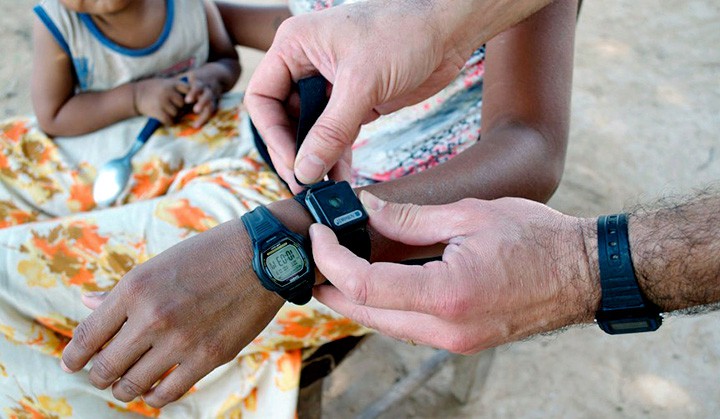
The researchers fitted participants in each community with wrist devices that logged data about their sleep-wake cycles.
Easy access to electricity and artificial light triggers a measurable reduction in human sleep, according to a new study of hunter-gatherer communities in Argentina. Researchers studied two groups of Toba/Qom hunter-gatherers indigenous to the Chaco region of northeastern Argentina. The communities share the same ethnic and socioeconomic background, but have a key difference: One community has free access to electricity and the other relies exclusively on natural light. Researchers from Yale, Harvard, the University of Washington, and the University of Quilmes and Conicet in Argentina conducted a study to see if the availability of electricity affected sleep patterns. They fitted participants in each community with wrist devices that logged data about sleep-wake cycles. Researchers gathered data during one week in the summer and one week in the winter. What the researchers found was a shift in both the timing and duration of sleep.
TO READ THIS ARTICLE, CREATE YOUR ACCOUNT
And extend your reading, free of charge and with no commitment.