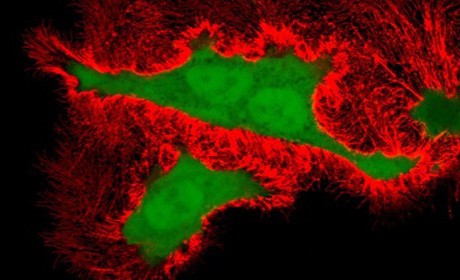
HeLa cells expressing the Ebola glycoprotein fragment GP2 (red), cytoplasm depicted in green.
In the course of basic research in membrane biochemistry scientists at Heidelberg University have gained new insight into the cytotoxic effect of the Ebola virus. Employing biochemical and cell biological methods they have shed light on the molecular relationships between the Ebola glycoprotein and its role in mediating cytotoxicity. Felix Wieland and his team at the Biochemistry Center (BZH) discovered that the virus glycoprotein interacts with cellular cholesterol, thus prompting the use of certain cholesterol-lowering agents in their investigations. The researchers report they succeeded in suppressing cellular damage in cell cultures. The results of this research were published in the journal "Nature " and may point to new approaches in the treatment in acute cases of Ebola infection. Since 2014, West Africa has experienced the largest Ebola outbreak in history. Experts estimate that the infectious disease, Ebola fever, has claimed more than 11,000 lives to date.
TO READ THIS ARTICLE, CREATE YOUR ACCOUNT
And extend your reading, free of charge and with no commitment.