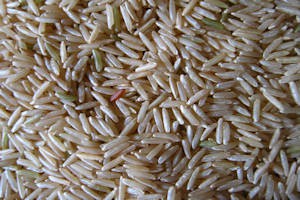
Study shows origins of rice cultivation
We welcome your feedback Please help us improve The University of Manchester website by completing a short questionnaire at the end of your visit. Yes, I'll give feedback No, thanks Rice - the staple food source of around 50% of the World's population, has been domesticated on three separate occasions, according to a new study by Faculty scientists. The work could be used to educate better rice grain improvement projects, something that may prove crucial with growing environmental concerns. The study focused on 3 major types of rice: the long-grain Indica which is non-sticky and mainly found in tropical lowland Asia; Japonica a short-grain rice that produces sticky rice, like the one in sushi and Aus, the drought-tolerant variety that grows in Bangladesh. Before this study, researchers had thought rice may have been domesticated once or perhaps twice. Scientists had looked at Japonica and Indica because they have had the longest history of cultivation. Some argue that Japonica came first around 10,000 years ago and that Indica emerged as a hybrid form of it a little later.
TO READ THIS ARTICLE, CREATE YOUR ACCOUNT
And extend your reading, free of charge and with no commitment.