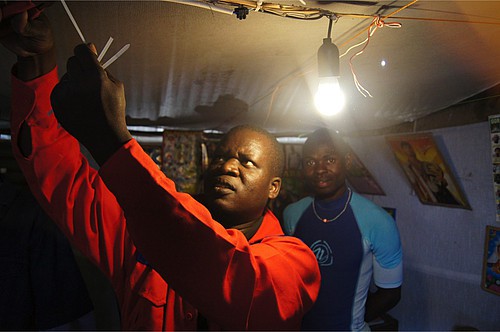
A solarpanel operating the trap provides electricity insight the houses (image: Alexandra Hiscox)
The use of a newly-developed mosquito trap incorporating human odour has resulted in a 70% decline in the population of the most significant malaria mosquito on the Kenyan island of Rusinga. In the following, the number of malaria infections declined by 30% according to a «Lancet»-study published today. It is the first time that a study assessed mass mosquito trapping as a tool for malaria control write the researchers from the University of Wageningen, the Kenyan International Centre of Insect Physiology and Ecology (ICIPE) and the Swiss Tropical and Public Health Institute (Swiss TPH). The mosquito trap could also be an effective tool to contain the spread of Zika and Dengue epidemics. A newly-developed mosquito trap outsmart malaria-transmitting mosquitoes. It attracts the insects by emitting a natural lure - namely human odour - composed of lactic acid and other substances transpired by the human skin. The mosquitoes approach the trap and are sucked into by a fan running with solar energy.
TO READ THIS ARTICLE, CREATE YOUR ACCOUNT
And extend your reading, free of charge and with no commitment.