ENS de Lyon
15 parvis René Descartes - BP 7000
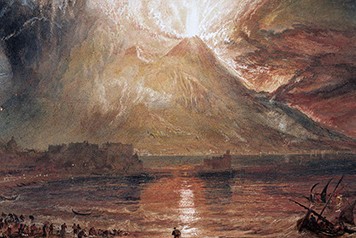
View of the eruption of Vesuvius in 79 AD, from the bay of Naples, as imagined by the artist William Turner between 1817 and 1820 Almost two thousand years after the eruption of Vesuvius that destroyed Pompeii and Herculaneum, certain periods of the history of Naples have just been reconstructed. Until now, historians and archaeologists had wondered about the impact of this volcanic eruption on the Aqua Augusta aqueduct which supplied Naples and neighboring cities with water. Recent geochemical analyses have made it possible to directly link the lead in the water pipes of the period with that trapped in the sediments of the old port of Naples. Results clearly show that the hydraulic network had been destroyed by the eruption of Vesuvius in AD 79 and that it took around fifteen years to replace it. These findings are the subject of an article published in the journal PNAS on May, 16 2016 by the laboratory Archéorient - environnements et sociétés de l'Orient ancien (CNRS/Université Lumière Lyon 2) and Laboratoire de géologie de Lyon: Terre, planètes et environnement (CNRS/ENS Lyon/Université Claude Bernard Lyon 1), in collaboration with international experts. The first author of this publication, Hugo Delile, is a CNRS post-doctoral researcher in the Archéorient laboratory. He first studied physical geography, then geoarchaeology, that lead him to collaborate with archeologists and geochimists of the ENS de Lyon.
TO READ THIS ARTICLE, CREATE YOUR ACCOUNT
And extend your reading, free of charge and with no commitment.