How does seeing work?
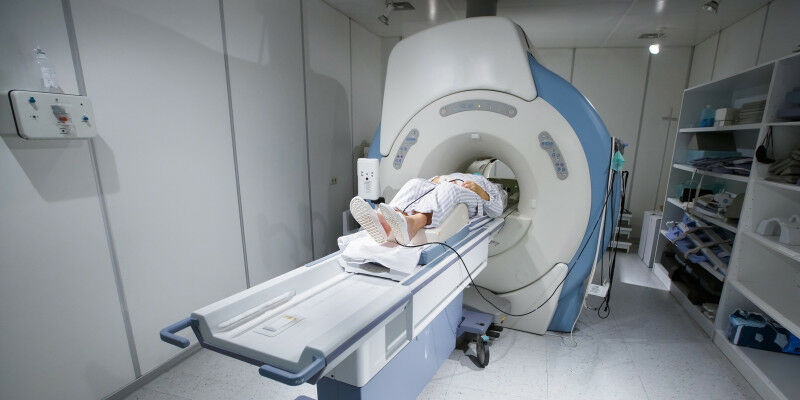
How does seeing work? What is a good image, and what is a bad image? How do we filter out the essential information from an image - the information we need to recognise what we see?. These are key questions for brain researchers as well as computer scientists, such as Thomas Pock, who is always looking for international cooperation to achieve progress in image processing. Since 2014, Thomas Pock has held an AIT-endowed professorship for Mobile Computer Vision at the Institute for Computer Graphics and Vision (ICG). His research work, developed in co-operation with colleagues from New York and Paris, focuses on mathematical models to distinguish between "good" images and "bad" images. Ultimately the objective is to filter machine-supplied image signals, extracting only the visual information that is absolutely essential for the reconstruction of a meaningful image with maximum detail. Research cooperation with New York. One of Thomas Pock's current projects is to build mathematical models for the reconstruction of two-dimensional images from magnetic resonance imaging signals (MRI signals).
TO READ THIS ARTICLE, CREATE YOUR ACCOUNT
And extend your reading, free of charge and with no commitment.