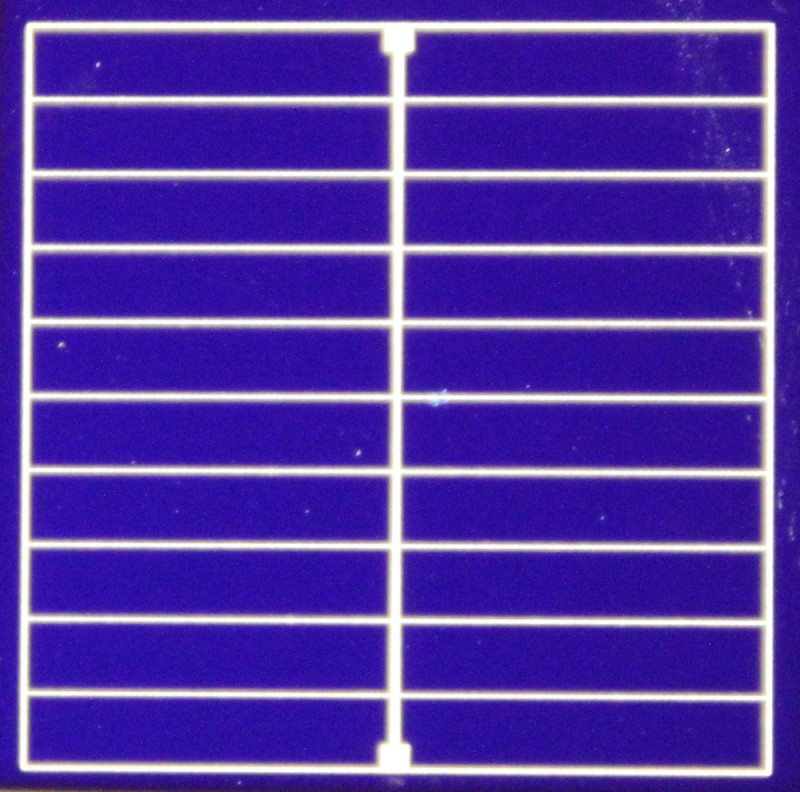
A photo of the DASH (dopant free asymmetric heterocontact) solar cell developed through an international collaboration. (Photo credit: James Bullock/Berkeley Lab, UC Berkeley, ANU)
An international research team has simplified the steps to create highly efficient silicon solar cells by applying a new mix of materials to a standard design. Arrays of solar cells are used in solar panels to convert sunlight to electricity. The special blend of materials-which could also prove useful in semiconductor components-eliminates the need for a process known as doping that steers the device's properties by introducing foreign atoms to its electrical. This doping process adds complexity to the device and can degrade its performance. "The solar cell industry is driven by the need to reduce costs and increase performance," said James Bullock, the lead author of the study, published this week in Nature Energy . Bullock participated in the study as a visiting researcher at the U.S. Department of Energy's Lawrence Berkeley National Laboratory (Berkeley Lab) and UC Berkeley. "If you look at the architecture of the solar cell we made, it is very simple," said Bullock, of Australian National University (ANU).
TO READ THIS ARTICLE, CREATE YOUR ACCOUNT
And extend your reading, free of charge and with no commitment.