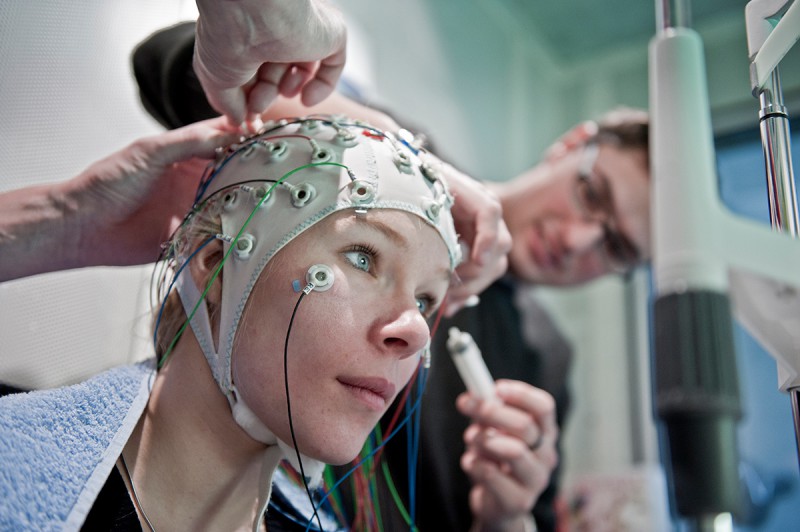
 Preparation of an EEG recording. It is used for a microstate analysis which can depict processes in the brain temporally and spatially.
Media releases, information for representatives of the media Media Relations (E) We do not always say what we think: we like to hide certain prejudices, sometimes even from ourselves. But unconscious prejudices become visible with tests, because we need a longer time if we must associate unpleasant things with positive terms. Researchers in Bern now show that additional processes in the brain are not responsible for this, but some of them simply take longer. A soccer fan needs more time to associate a positive word with an opposing club than with his own team. And supporters of a political party associate a favourable attribute faster with their party than with political rivals - even if they endeavour towards the opposite. It is long since known that a positive association with one's own group, an "in-group", happens unconsciously faster than with an "outgroup". These different reaction times become visible in the Implicit Association Test (IAT) with which psychologists examine unconscious processes and prejudices.
TO READ THIS ARTICLE, CREATE YOUR ACCOUNT
And extend your reading, free of charge and with no commitment.
Your Benefits
- Access to all content
- Receive newsmails for news and jobs
- Post ads