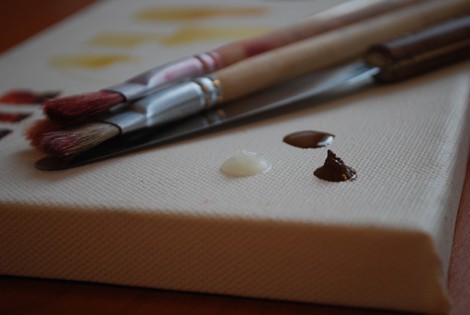
 © Hélène Pasco, LAMS (CNRS, UPMC) On canvas, the consistency of gels and gel-paint mixtures differs greatly from that of paint alone, which spreads without retaining volume.
To paint quickly while creating exceptional texture and volume effects, J. M. W. Turner and other English artists of his generation relied on the development of innovative gels. All the rage in the 19th century—and still in use today—these compounds alter the properties of the oil paints they are combined with. CNRS, UPMC, and Collège de France
1 researchers have finally learned the chemical secrets behind these mixtures. Lead—in its acetate form—is essential for the formation of the gels. The team's findings are published in the 9 January 2017 issue of Angewandte Chemie International Edition . Oil paints were traditionally made by grinding pigments together with linseed, walnut, or poppy seed oil. When prepared in this way, oil paints have very long drying times. Completing a painting takes months, or even years if several layers of color are to be applied. In the 19th century, artists like J. M. W. Turner introduced innovations in oil painting that shortened drying time and allowed them to add further dimensions of light and movement through the creative use of novel properties. Aided by chemists, they combined materials to obtain new formulations that met their requirements: oil-resin gels containing lead—most often lead acetate, in aqueous solution or solid form. These 'gumtions', as they were called by the English painters using them, made it possible to finish a painting faster—in just days—while incorporating unrivaled volume and texture effects. How exactly do these materials assume their form?
TO READ THIS ARTICLE, CREATE YOUR ACCOUNT
And extend your reading, free of charge and with no commitment.
Your Benefits
- Access to all content
- Receive newsmails for news and jobs
- Post ads


