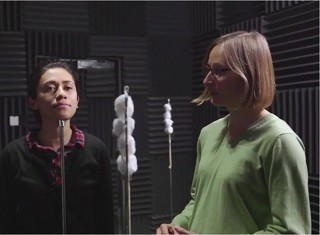
See end of article for image details
Human echolocation enables people to 'see' with their ears and build a picture of the world around them. The technique involves making sharp mouth clicks and then translating the sound reflected by surrounding objects into spatial information - a method also used by whales, dolphins and bats. Dr Lore Thaler , Associate Professor in the Psychology Department , studies the way expert echolocators use the technique and her recent research shows that echolocators make louder or sharper clicks in order to see behind them. We caught up with her to find out more about her research. What drew you to study human echolocation? Back in 2009 I was a postdoctoral student at Western University in Ontario, Canada where I was researching visual perception. My adviser suggested I look at Human Echolocation, which was something I had never heard of. I found some YouTube videos of Daniel Kish, an American expert in human echolocation and the President of World Access for the Blind, and it was amazing.
TO READ THIS ARTICLE, CREATE YOUR ACCOUNT
And extend your reading, free of charge and with no commitment.