 Double-bridged peptides
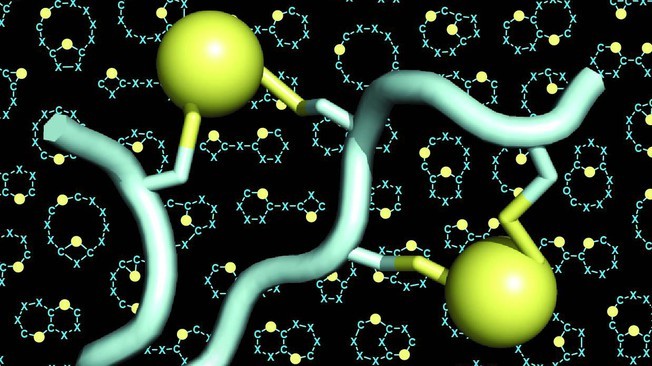
EPFL scientists have developed a new type of "double-bridged peptide" that can be tailored to bind tightly to disease targets of interest. The peptides' highly efficient binding, combined with their small size and high stability make them ideal for drug therapies. The work is published. Image: A model of a double-bridged peptide (the peptide in light blue, the two bridges in yellow). The background of the figures shows many examples of skeletons (also named "scaffolds" or "backbones") of double-bridged peptides (credit: C. Heinis/EPFL) Peptides are short chains of amino acids that can bind to proteins and change their function. They show high binding affinity, low toxicity, and are easy to synthesize, all of which makes peptides ideal for use in drug development, and many naturally occurring peptides such as insulin, oxytocin, somatostatin and the antibiotics vancomycin or polymyxin B, are already successfully used like that. However, using peptides as drugs faces two challenges.
TO READ THIS ARTICLE, CREATE YOUR ACCOUNT
And extend your reading, free of charge and with no commitment.
Your Benefits
- Access to all content
- Receive newsmails for news and jobs
- Post ads